The following titles are available for purchase through their publisher or independent booksellers.
 |
Unending Crisis: National Security Policy after 9/11 In Unending Crisis, Thomas Graham Jr. examines the second Bush administration’s misguided management of foreign policy, the legacy of which has been seven major – and almost irresolvable – national security crises involving North Korea, Iran, Afghanistan, Pakistan, Iraq, the Arab-Israeli conflict in Palestine, and nuclear proliferation. Unending Crisis considers these issues individually and together, emphasizing their interrelationship and delineating the role that the neoconservative agenda played in redefining the way America is perceived in the world today. » MORE… |

 |
The New Humanitarians: Inspiration, innovations and blueprints for visionaries Volume 3, Chapter 7: “The Global Security Institute: Seeking True Security for All through International Cooperation,” by Rhianna Tyson. “All of us aspire to someday ‘make a real difference’ in the world. Yet, caught up in our own day-to-day personal crises and seemingly pressing obligations, very few of us ever fulfill this important human dream. Chris Stout is a world class humanitarian who has taken the time to vividly explore the inside world of those who have succeeded. Perhaps with this new appreciation, more of us will eventually fulfill our own personal quests to make the world just a little bit better.” – Pat DeLeon, PhD, MPH, JD, Past President of the American Psychological Association. » Click here to read an excerpt from the chapter on the Global Security Institute, by Rhianna Tyson » Click here to purchase the book from Greenwood Publishers » Read the review from the American Psychological Association |
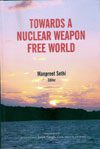 |
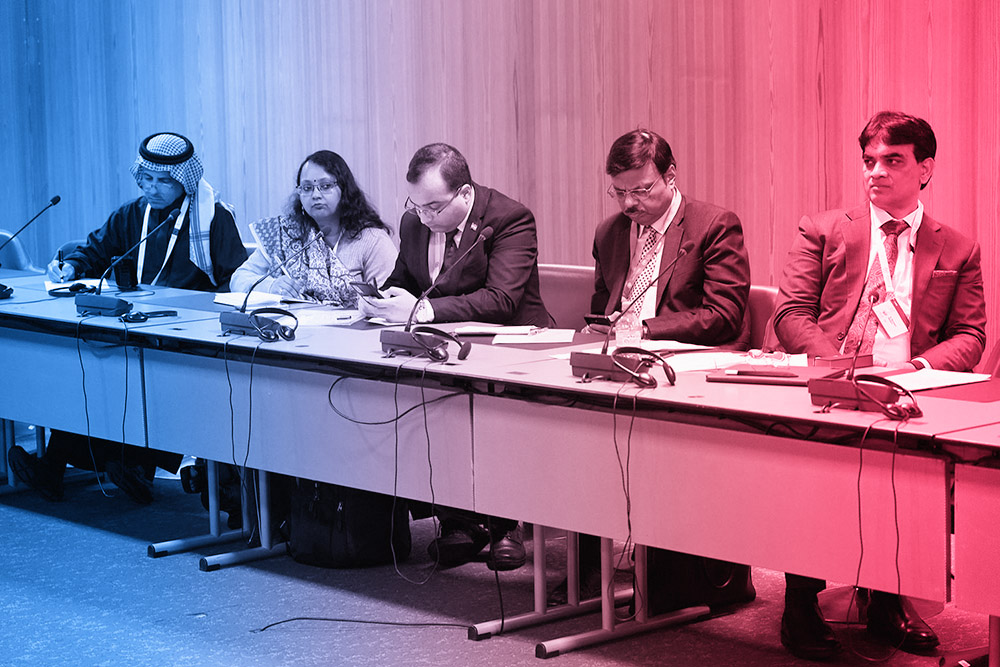
Towards a Nuclear Weapon Free World “Towards a Nuclear Weapon Free World” features the presentations made at the 2008 high-level conference in New Delhi commemorating the Rajiv Gandhi Plan to Eliminate Nuclear Weapons, including presentations by Prime Minister Singh, Vice President Ansari, External Affairs Minister Pranab Mukherjee, UN High Representative Sergio Duarte, GSI President Jonathan Granoff, former MPI Chairman Hon. Douglas Roche, O.C., and others. |
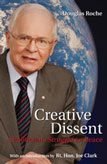 |
Creative Dissent: A Politican’s Struggle for Peace Featuring a compelling introduction by the Rt. Hon. Joe Clark, Canadas 16th Prime Minister, Creative Dissent: A Politician’s Struggle for Peace recounts Douglas Roche’s life story. Roche is one of only three Canadians who has served his country as a Member of Parliament, Ambassador and Senator. Over the past 30 years, he has emerged as one of the world’s most passionate advocates for nuclear disarmament.Funny, tearful, exhilarating and exasperating, Roche looks back on his 80 years with admissions of mistakes, moments of triumph and, most of all, a feeling of being blessed by God with a productive life and devoted family. There are lessons here: about politics and the perils awaiting public figures, about bringing spiritual values to the public square, about never succumbing to the cynics. Most of all, the book is about one Canadian’s passion for peace. |
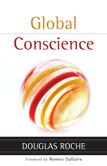 |
Global Conscience Beyond the widely publicized news of war, poverty, and human rights violations is the uplifting awakening of concern for our fellow human beings as nations are calling for a new global ethic to make the world a better place. By looking at what we have achieved, we are able to provide hope and empowerment. A “Yes, I can make a difference” mentality allows us to break free of the immobilizing fear, affirming that the route to public policies built on global conscience is possible. DOUGLAS ROCHE is an author, parliamentarian, and diplomat who specializes in peace and human security issues. He is a member of the Pugwash Council, which in 1995 won the Nobel Peace Prize for its work on nuclear disarmament. |
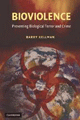 |
Bioviolence: Preventing Biological Terror and Crime Bioviolence is the hostile infliction of disease: our most fundamental terror. Traitors to humanity could inflict vast tolls making everyone potentially vulnerable. Bioviolence is the most realistic way for humanity’s traitors to raze the pillars of modern civilization. Too little is being done to prevent bioviolence. While bio-offenders are becoming more focused and organized, prevention policies are vague, gap-ridden, and unsupervised. No other threat presents such severe danger yet such a failure of leadership to reduce risks. The strategy for preventing bioviolence requires a broad international commitment to promote bioscience while understanding its inherent and unavoidable dangers. Bioviolence threats shrink our planet into an interdependent neighborhood. This book explores how global governance should evolve to address challenges of advancing science and technology. |
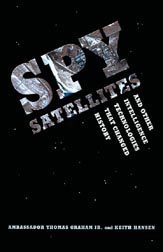 |
Spy Satellites and Other Intelligence Technologies That Changed History Published by University of Washington Press, 2007. Much has been said and written about the failure of U.S. intelligence to prevent the terrorist attacks on September 11, 2001, and its overestimation of Iraq’s weapons of mass destruction under Saddam Hussein. This book focuses instead on the central role that intelligence-collection systems play in promoting arms control and disarmament. Ambassador Thomas Graham Jr. and Keith Hansen bring more than fifty combined years of experience to this discussion of the capabilities of technical systems, which are primarily based in space. Their history of the rapid advancement of surveillance technology is a window into a dramatic reconceptualization of Cold War strategies and policy planning. Graham and Hansen focus on the intelligence successes against Soviet strategic nuclear forces and the quality of the intelligence that has made possible accurate assessments of WMD programs in North Korea, Iran, and Libya. Their important insights shed a much-needed light on the process of verifying how the world harnesses the proliferation of nuclear arms and the continual drive for advancements in technology. |
 |
War in Heaven: The Arms Race in Outer Space Publilshed by The New Press, 2007. When most of us think about the potential of outer space for future generations, we think of world communications, satellite navigation, and scientific exploration. U.S. Space Command, however, thinks about weapons. Believing that conflict in space and wars fought from space are inevitable, the president has called on the agency to weaponize outer space and thus provoke an arms race that could cost the United States trillions of dollars and could lead to the demise of the human race. In War in Heaven, a Nobel Prize-nominated peace activist and a former U.S. foreign service officer (who helped write the Outer Space Treaty of 1967) look at the history of military uses of space and the current plans for “militarizing the heavens,” including kinetic, laser, nuclear bombardment, and anti-satellite weapons. Contrary to the claims of Secretary of Defense Donald Rumsfeld that the United States faces a “space Pearl Harbor,” Caldicott and Eisendrath show that the United States itself is today the principal obstruction to passage of an international treaty banning weapons from outer space. At a time when plans to build and deploy space weapons are on the administration’s agenda but only just becoming known to the general public, this book will help launch a national discussion of a critical issue. “War in Heaven will bring you up-to-date on the serious moves under way to weaponize space and tell you how we can act to cope with them. Once it is triggered, international cooperation for military control of space will make the Cold War nuclear standoff look tame.” – Ambassador Jonathan Dean, US Representative to the NATO-Warsaw Pact Receive a free copy with your gift of $100 to the Global Security Institute. |
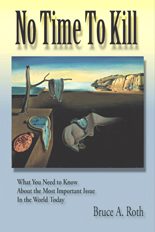 |
No Time To Kill No Time To Kill is a holistic analysis of issues which threaten the extinction of life on a mass scale: WMDs, genocide, and terrorism. Roth focuses on these complex problems through the lenses of anthropology, psychology, tehology, sociology, law, physical science, politics and the history of war and weaponry in order to answer the most pressing questions today. “No Time To Kill is a fascinating and informative work. It will be a valuable addition to my research library.” – Walter Cronkite “Warmest congratulations on your initaitive, not to mention your capacity to go straight to the heart of these complex issues, and to recognize the real elements of danger for us all in the continued retention of nuclear weapons.” – Robert J. O’Neill, former Chairman of the Council, International Institute for Strategic Studies, University of Oxford. Receive a free copy with your gift of $100 to the Global Security Institute. |
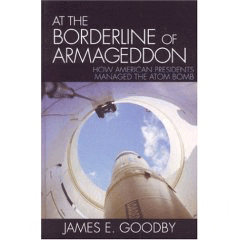 |
At the Borderline of Armageddon: How American Presidents Managed the Atom Bomb Published by Rowman & Littlefield Publishers, Inc. (June 28, 2006) In this important new work, scholar, teacher, and diplomat James E. Goodby analyzes how American presidents have confronted the dilemma of nuclear weapons. Drawing on his own involvement in over fifty years of nuclear policy, he explores specific case studies to illustrate the decision making process and the delicate balance between international cooperation and freedom of action, between the rules of behavior and governmental autonomy. |
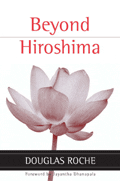 |
Beyond Hiroshima Published by Novalis Press. October 2005. The Second Nuclear Age has begun, one in which nuclear weapons are no longer just for deterrence but for war-fighting strategies. Unimaginable catastrophes for humanity lie ahead unless the present trend to the proliferation of nuclear weapons is stopped. Former Senator Douglas Roche’s latest book describes the actions taken by a number of governments and civil society working for a nuclear weapons-free world. Getting “Beyond Hiroshima” is a realistic hope. Roche, who has worked on the nuclear weapons issue as a parliamentarian, diplomat and educator for 30 years, shows how that hope can come alive. “[Douglas Roche] builds up a political, moral and religious case, drawing on his thirty years’ experience working on nuclear issues as a parliamentarian, diplomat and educator.” — Dr. Jaynatha Dhanapala Receive a signed copy with your gift of $100 to the Global Security Institute. |
 |
Common Sense on Weapons of Mass Destruction Published by University of Washington Press. October 2004. “Thomas Graham Jr. has cut right down to the essentials about mankind’s most dangerous weapons. The general public will be encouraged to demand better policies.” — Dr. Hans Blix Receive a signed copy with your gift of $100 to the Global Security Institute. |
 |
Perspectives on 9/11 Mr. Granoff’s essay entitled “Interfaith Imperatives Post 9/11: Sovereign Value of the Golden Rule” Summer 2004 Available from Amazon.com |
 |
The Sovereignty Revolution Published by Stanford Law and Politics, an imprint of Stanford University Press “The Sovereignty Revolution, finished shortly before his death, gives voice to his visionary understanding of how to create a world with more friends and fewer terrorists.” — President Bill Clinton Receive a signed copy with your gift of $100 to the Global Security Institute. |
 |
The Human Right to Peace Senator Douglas Roche, a former journalist, diplomat, and educator, has been actively involved in issues related to disarmament and development for 30 years. Roche argues persuasively for the need to supplant our current culture of war with a culture of peace. Roche’s impressive credentials and years of experience lend his ideas a pragmatism that is hard to dismiss. Available from: Novalis, 49 Front Street East, #200, Toronto, Ontario, M5E 1B3, Tel. 416-363-3303, $24.95 (Canadian) |
 |
Cornerstones of Security: Arms Control Treaties in the Nuclear Era By Thomas Graham, Jr. and Damien Lavera May 2003 Available from University of Washington Press |

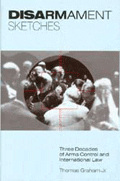 |
Disarmament Sketches: Three Decades of Arms Control and International Law By Thomas Graham, Jr. June 2002 Available from University of Washington Press |
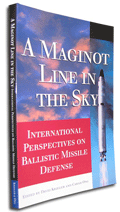 |
A Maginot Line in the Sky: International Perspectives on Ballistic Missile Defense Maginot Line brings together the views of eighteen contributors of different nationalities, induding Americans, on the proposed US Ballistic Missile Defense plans. These perspectives should be included in any intelligent discussion of whether or not the US should proceed as it is currently planning…. Available from the Nuclear Age Peace Foundation |
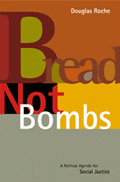 |
Bread, Not Bombs: A Political Agenda for Social Justice A world of “bread not bombs” is the future that Senator Douglas Roche envisions. Housing, health, and education services are desperately needed for the world’s poorest people but instead governments spend billions on war and on the weapons of war. Available from Amazon.com |
 |
A Fast Track to Zero Nuclear Weapons: The Middle Powers Initiative and the New Agenda Coalition The Middle Powers Initiative is a network of international citizen organizations working to encourage the nuclear weapon states and their influential allies to move rapidly to eliminate nuclear weapons via practical steps including a Nuclear Weapons Convention. The New Agenda Coalition is a group of middle-ranking nations whose governments have also called for the early elimination of nuclear weapons via similar steps. The work of MPI and NAC at the United Nations and elsewhere is described, and their impact on NATO nuclear weapons policy discussed. Available from the Disarmament and Security Centre |
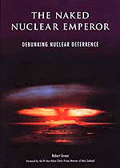 |
The Naked Nuclear Emperor: Debunking Nuclear Deterrence It is clear that the nuclear weapon states, led by the US, UK and France, cite nuclear deterrence doctrine as the final, indispensable justification for maintaining their nuclear arsenals. Rob Green, Commander, Royal Navy (Ret.) herein debunks nuclear deterrence and offers alternatives, showing there is a serious prospect of eliminating nuclear weapons. Available from the Disarmament and Security Centre |
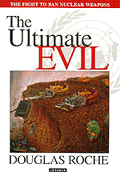 |
The Ultimate Evil: The Fight to Ban Nuclear Weapons The Campaign to ban nuclear weapons has begun. Fifty-two years after the first atomic bomb was dropped on Hiroshima, a new effort is being made to persuade the countries of the world to disarm. Douglas Roche, Canada’s former Ambassador for Disarmament, describes the key developments of this campaign, beginning with a momentous 1996 World Court decision calling for a ban on nuclear weapons. Available from James Lorimer & Co. |

The Global Security Institute is dedicated to strengthening international peace and security based on co-operation, diplomacy, shared interests, the rule of law and universal values. Our efforts are guided by the skills and commitment of our team of former heads of state, distinguished diplomats and politicians, celebrities, religious leaders, Nobel Peace Laureates, disarmament and legal experts, and concerned informed citizens. Our focus is on controlling and eliminating humanity’s greatest threat – nuclear weapons.